


Paul Sincaglia, Managing Director, International Fire Suppression Alliance, Ltd.
It has been more than 20 years since National Fire Protection Association's NFPA 13, Standard for the Installation of Sprinkler Systems mandated the use of alpha-numeric markings on all sprinklers as a means of identifying their operational characteristics. These markings, now commonly referred to as a Sprinkler Identification Number (SIN), are nearly ubiquitous across Canada, the United States, and several other nations where NFPA 13 has been adopted. Yet, many who rely upon the SIN as part of their roles in the design, installation, inspection, and/or maintenance of sprinkler systems are often unaware of the benefits and history behind this simple system.
The Sprinkler Identification Number (SIN)
A SIN is a four-to-six-character alpha-numeric code that includes one or two capital English letters followed by three or four numbers which is physically applied to the sprinkler, often on the deflector, although NFPA 13 does not require it be placed there. Typical examples of a SIN could include: L414 or BD1423.
The SIN characters (letters) identify the sprinkler manufacturer. The three or four numbers that follow are then provided by the manufacturer in a manner that best suits their needs. Some manufacturers use the numbers to represent specific sprinkler characteristics within their product lines, others use them strictly as a cataloging number. Figure 1 below illustrates the physical application of the SIN to several sprinkler types.
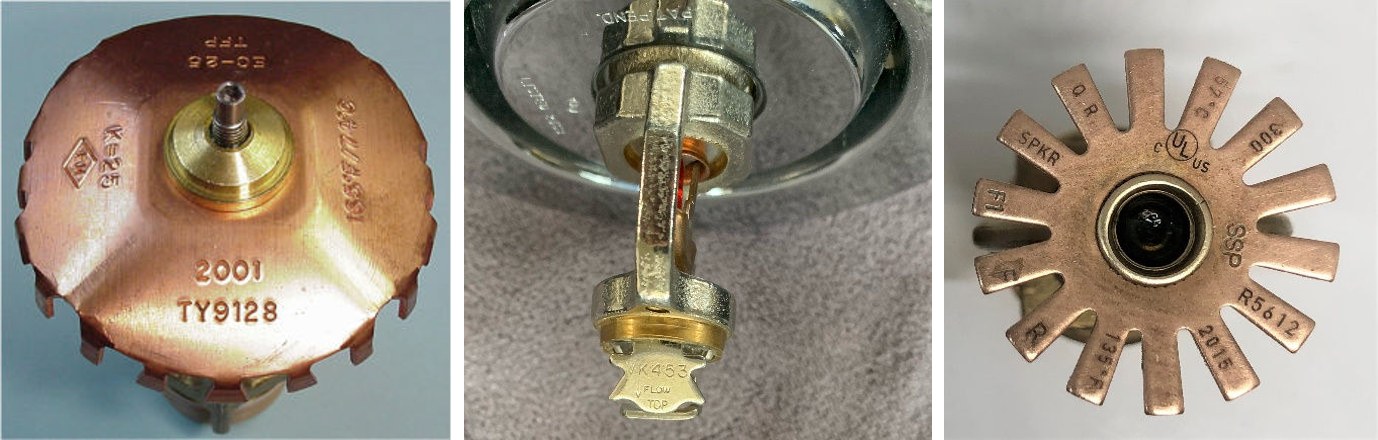
Figure 1: Location of some typical SIN on sprinklers (Photos courtesy of JCI, Reliable, and IFSA)
But regardless of how each manufacturer chooses to manage their Sprinkler Identification Number program internally, the goal of this flexible system is the same: to ensure proper selection and application of each sprinkler.
What Prompted Development of the SIN?
The fire sprinkler industry is not often thought of as being "disruptive" or radically innovative. And to be fair, the great majority of the sprinklers installed today do not look all that different from some of the original patented designs. Moreover, through the first half of the 20th century, the majority of sprinkler head evolution was limited to improvements in manufacturing, reliability, and quality. Not exactly sexy stuff.
However, by the 1950's, with ongoing loss prevention research and an expanding record of successful fire control, the fire sprinkler industry reached a pivotal conclusion; fire sprinkler discharge directed toward the source of the fire is simply more effective. Which in turn led to the development of the ½" K-5.6 (K-80) Standard Spray Upright (SSU) and Pendent (SSP) sprinklers that became a basis of design that is still widely used to this day. But by the 1970's shifts in industrial practices, particularly warehouse storage, and a developing interest in sprinklers as a life safety tool revealed that the "standard spray" sprinkler had limitations when used to try and protect the evolving challenges and new fire safety objectives.
In response, the sprinkler industry began developing new products incorporating faster response, specialized discharge characteristics, and often larger nominal sizes that created enhanced capabilities better suited to protecting the evolving hazards. Yet, as these new products were demonstrating the successful application of fire sprinkler technology to meet the challenges, all these new products were creating a new set of problems for practitioners out in the field.
Up to this point, the SSU and SSP sprinklers of the past had been largely interchangeable so long as the fitters selected the same orientation and temperature ratings. But these new more specialized sprinkler innovations required designers, installers, regulators, and maintainers to have an ability to readily identify and confirm that the right sprinkler was selected and installed properly.
NFPA 13, Standard for the Installation of Sprinkler Systems sought to address the expanding variety of sprinklers by requiring manufacturers to provide a means of visual identification that included the installation of pintles to the deflectors, adding markings on the sprinkler frames, and mandating sprinklers with larger orifice sizes employ larger thread connections. (See Figures 2 and 3)
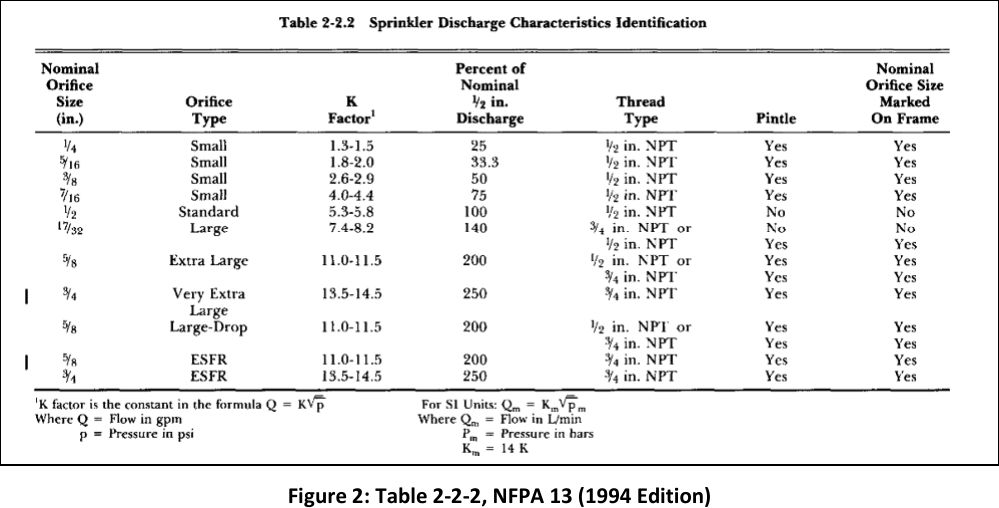
Figure 2: Table 2-2.2, NFPA 13 (1994 Edition)
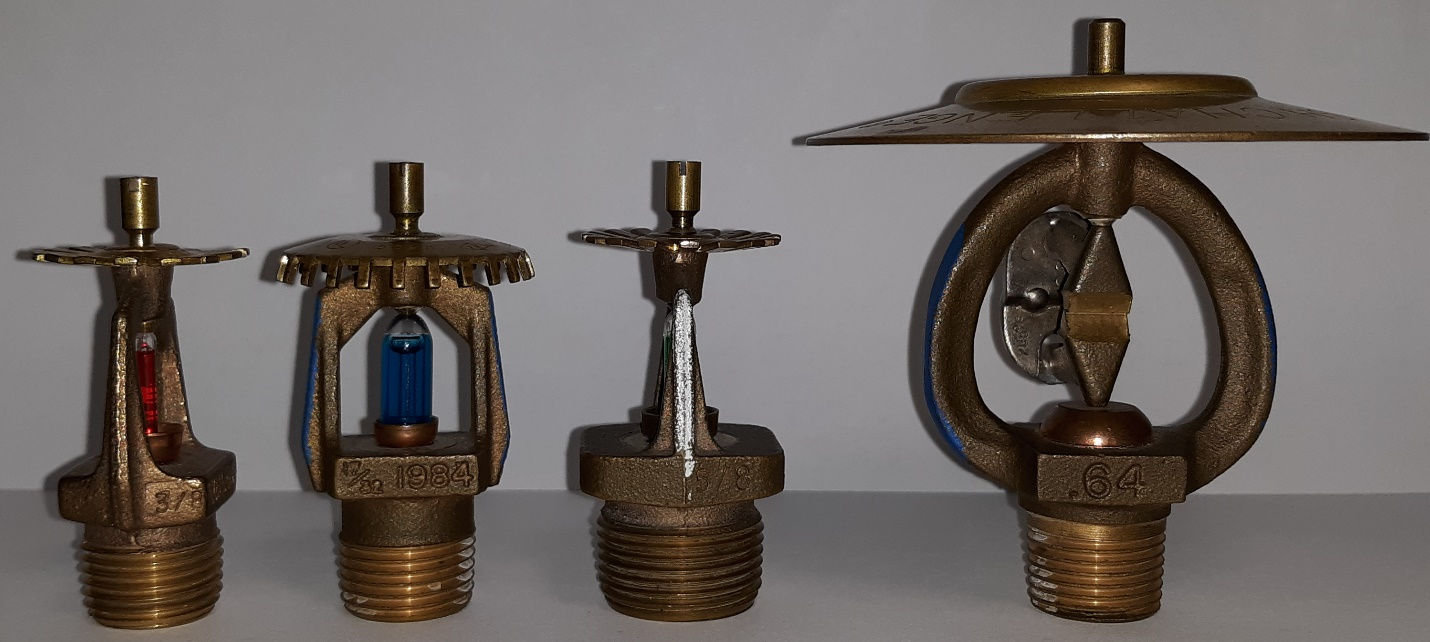
Figure 3: General illustration of fire sprinklers with pintles and orifice size frame markings manufactured before 2001 (Photo courtesy of The Viking Corporation)
But this method of marking and identification of sprinklers proved to be largely unworkable as many of the new sprinklers often incorporated more than just one feature outside of what had once been considered "standard". There had to be a better way.
During the drafting cycle for the 1999 Edition of NFPA 13, the Sprinkler Committee conceived a coded numbering methodology that would permit identification of key sprinkler performance criteria (K-factor, orientation, responsiveness, etc.) that they envisioned could be uniformly applied across the entire fire sprinkler industry. But it quickly became clear that such a highly structured coding system would not be workable. There were already significant variations between manufacturers where their new specialized products made it all but impossible to codify. And that was before trying to create sufficient room within that system to account for future innovations, obsolescence, and any current or future differences in the product approval standards.
As a result, the Sprinkler Committee limited the application of the unique alpha-numeric designations to key differences in sprinkler performance such as orifice size, response classification, spray pattern characteristics, maximum working pressure, etc. This narrowed scope also permits manufacturers to use the same SINs for groups of products that had only minor variations in attributes like finishes, activation temperature ratings, and/or threaded connection types. Yet, the system allows each manufacturer to develop and employ a numbering system that works best for them. For example, Model AB120 could be one manufacturer's standard response K-5.6 (K-80 metric) upright spray sprinkler, while Model BC120 could be another manufacturer's K-14 (K-200 metric) pendent ESFR.
The SIN Today
Sprinkler manufacturers register one or two letter codes with the International Fire Suppression Alliance, who serve as the industry clearinghouse for this program. But there are some limitations. First, there are some character sets that are prohibited because their use could potentially cause confusion if used in conjunction with established industry acronyms and abbreviations — see the current list of prohibited SIN characters in the SIN Character Directory.
Second, once a SIN character combination has been registered and applied on to a sprinkler, that character set becomes the permanent property of the corresponding manufacturer. Third, manufacturers are limited to a maximum of two letter character designations. And while that remains current policy, the IFSA monitors changes and consolidation in the fire sprinkler industry that has resulted in some registered character sets to become dormant while others have been accumulated by manufacturers through corporate acquisitions. Such changes are routinely updated to permit sprinkler professionals to more easily identify the originally registered manufacturers and when applicable, their successors.
The SIN Future
As of March 2023, there have been 132 SIN Character letter combinations registered with the IFSA. Of these, 73 are in active use with sprinklers in production that are Listed by UL Solutions and/or Approved by FM Approvals, with several others currently in the process of obtaining product certification. And historically, there are about 4 new SIN character registrations every year. The full, current list of SIN character registrations is available in the SIN Character Directory.
These trends will almost certainly continue. The fire sprinkler industry is still growing, particularly as nations around the world continue to add and expand the use of sprinkler protection within their building codes. And there will certainly be new manufacturers and further innovation in sprinkler technology as well. After 20 years, this simple system is serving us well; permitting designers, installers, maintainers, and regulators to readily identify sprinklers by manufacturer and performance characteristics which in turn helps ensure the sprinklers are properly installed to ensure everyone's mutual safety.
References: NFPA 13, Standard for the Installation of Sprinkler Systems, 1994 and 1999 Editions.